

Cannabis Education
THC vs CBD – Complete Comparison Guide
Feb
THC vs CBD – Complete Comparison Guide
Quick Comparison Table
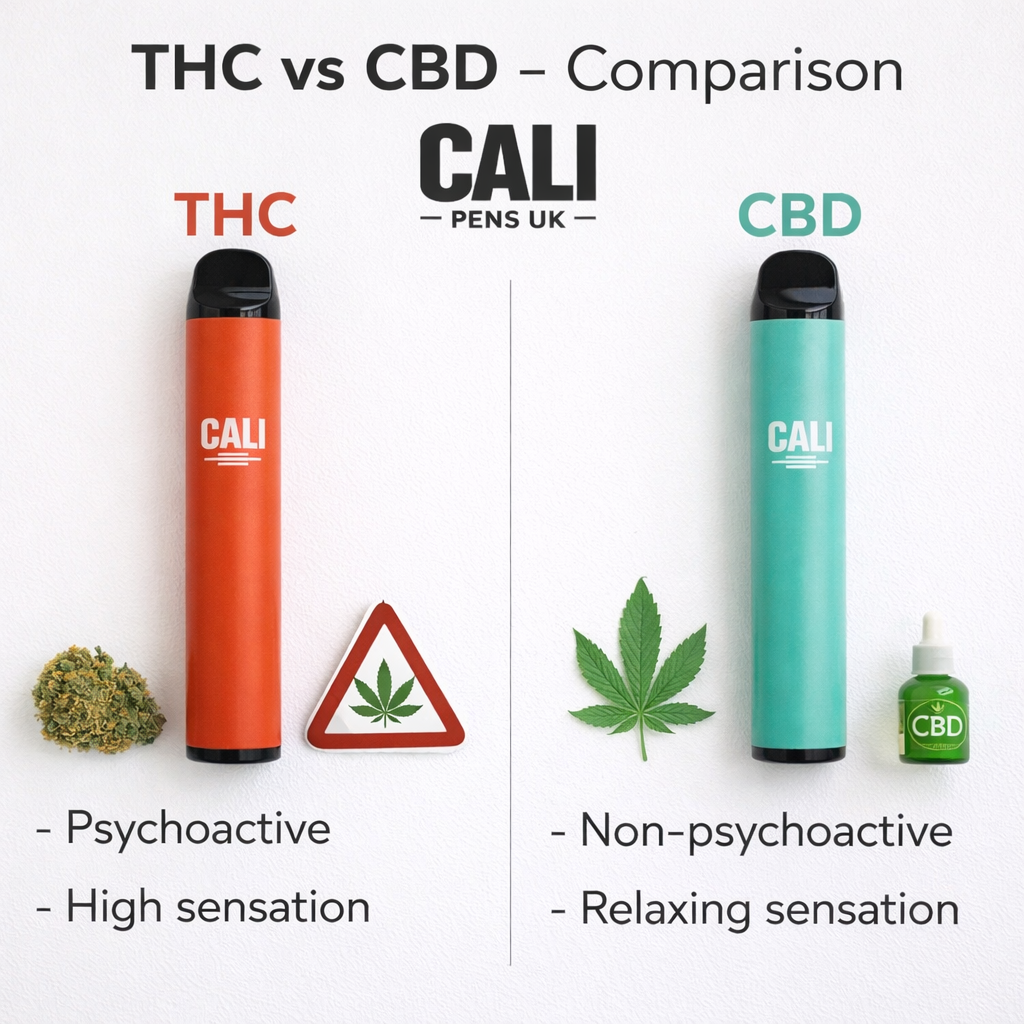
| Factor | THC | CBD |
|---|---|---|
| Psychoactive | Yes | No |
| Legal UK (Recreation) | Controlled | Legal (<0.2% THC) |
| Effects | Euphoria, altered perception | Relaxation, no high |
| Medical Uses | Pain, nausea, appetite | Anxiety, inflammation, seizures |
| Side Effects | Anxiety, paranoia (high doses) | Minimal, drowsiness |
| Drug Testing | Yes, detectable | Unlikely to cause positive |
What is THC?
Tetrahydrocannabinol (THC) is the primary psychoactive compound in cannabis. When consumed, THC binds to CB1 receptors concentrated in the brain, producing the characteristic “high.”
THC Concentrations:
- Flower: 15-30% THC
- Vapes: 80-95% THC
- Edibles: 5-100mg per serving
Mental Effects:
✓ Euphoria and mood elevation
✓ Altered time perception
✓ Enhanced sensory experiences
✓ Increased creativity (subjective)
✗ Potential anxiety in high doses
✗ Short-term memory impairment
Physical Effects:
✓ Pain relief
✓ Muscle relaxation
✓ Increased appetite (“munchies”)
✓ Anti-nausea properties
✗ Dry mouth, red eyes
✗ Increased heart rate
What is CBD?
Cannabidiol (CBD) is a non-intoxicating cannabinoid that interacts with the endocannabinoid system without producing a high.
CBD Concentrations:
- Legal UK Products: <0.2% THC content
- CBD Oils: 250-2,500mg per bottle
- CBD Vapes: 100-1,000mg per cartridge
- CBD Edibles: 10-50mg per serving
Mental Effects:
✓ Calmness without intoxication
✓ Reduced anxiety (many users)
✓ Improved focus (reported)
✓ Mental clarity maintained
✗ No euphoria or “high”
Physical Effects:
✓ Anti-inflammatory properties
✓ Muscle tension relief
✓ No appetite stimulation
✓ Pain management
✓ May improve sleep quality
Medical Applications
THC Medical Uses
Chronic Pain: THC activates cannabinoid receptors reducing pain signals
Nausea/Vomiting: Especially effective for chemotherapy patients
Appetite Stimulation: Helps with cachexia, eating disorders
Muscle Spasms: MS patients report significant relief
PTSD: May help with trauma-related symptoms
Glaucoma: Reduces intraocular pressure
CBD Medical Uses
Anxiety Disorders: Reduces anxiety without sedation
Epilepsy: FDA-approved for specific seizure types
Inflammation: Anti-inflammatory without psychoactivity
Sleep Disorders: Promotes relaxation for better sleep
Arthritis: Joint pain and inflammation relief
Addiction: May help with substance use disorders
Legal Status UK
THC:
- Classified as Class B controlled substance
- Possession illegal for recreational use
- Medical prescription possible (rare, specialist only)
- No legal THC products for over-the-counter sale
- Penalties: Up to 5 years imprisonment for possession
CBD:
- Legal when containing <0.2% THC
- Must be derived from EU-approved hemp strains
- Sold over-the-counter (shops, online, health stores)
- No prescription required
- Widely available and regulated as food supplement
Side Effect Profiles
THC Side Effects
Common (>10% users):
- Dry mouth (cottonmouth)
- Red eyes
- Increased appetite
- Short-term memory impact
- Drowsiness or fatigue
Less Common (1-10% users):
- Anxiety or paranoia
- Dizziness
- Rapid heartbeat
- Impaired coordination
- Panic attacks (high doses)
Rare (<1% users):
- Hallucinations
- Severe anxiety episodes
- Cannabinoid hyperemesis syndrome
Risk Factors:
- High doses increase side effects
- Inexperienced users more susceptible
- Pre-existing anxiety conditions
- Genetic predisposition
CBD Side Effects
Common (>5% users):
- Mild drowsiness
- Dry mouth (less than THC)
- Changes in appetite
Less Common (1-5% users):
- Diarrhea (high doses)
- Fatigue
- Drug interactions (consult doctor)
Generally Well-Tolerated:
- WHO reports excellent safety profile
- No addiction potential
- No withdrawal symptoms
- Wide therapeutic window
Can You Combine THC and CBD?
The Entourage Effect:
Many users find combining THC and CBD creates synergistic benefits where cannabinoids work together.
CBD May Moderate THC Effects:
- Reduces THC-induced anxiety
- Lessens paranoia risk
- Extends duration of relief
- Balances psychoactivity
Popular Ratios:
- 1:1 THC:CBD – Balanced, reduced anxiety
- 2:1 THC:CBD – More psychoactive, some moderation
- 1:2 CBD:THC – Minimal high, therapeutic focus
- 20:1 THC:CBD – Strong effects, trace CBD
Product Examples:
- Full-spectrum CBD (contains trace THC)
- Balanced vape cartridges
- Combination edibles
- Dual-chamber vapes
Which Should You Choose?
Choose THC if you want:
Psychoactive recreational effects
Strong pain relief
Appetite stimulation
Sleep assistance through sedation
Enhanced sensory experiences
Don’t mind intoxication
Not concerned about legality
Choose CBD if you want:
No intoxication
Anxiety reduction without impairment
Legal, accessible products
Workplace-safe options
General wellness support
Don’t need psychoactive effects
Prefer legal certainty
Choose THC+CBD blends if you want:
✓ Balanced therapeutic effects
✓ Moderated psychoactivity
✓ Enhanced entourage effects
✓ Customizable experiences
✓ Reduced side effects
Dosing Guidelines
THC Dosing
Micro-Dose: 1-2.5mg THC
- Subtle relaxation
- Maintained functionality
- Creative enhancement
Low Dose: 2.5-5mg THC
- Mild euphoria
- Noticeable relaxation
- Functional high
Medium Dose: 5-15mg THC
- Pronounced effects
- Strong euphoria
- Impaired functionality
High Dose: 15-30mg+ THC
- Intense psychoactivity
- Heavy sedation
- Experienced users only
Vaping Doses:
- 1 puff ≈ 1-3mg THC absorbed
- Start with 1-2 puffs
- Wait 15 minutes between doses
CBD Dosing
General Wellness: 10-25mg daily
Moderate Support: 25-50mg daily
Intensive Use: 50-100mg+ daily
CBD Has Wide Safety Margin:
- Start low (10mg)
- Increase gradually
- Effects accumulate over time
- Consistent daily use recommended
Product Format Comparison
THC Products
Vapes/Disposables:
- Onset: 1-5 minutes
- Duration: 2-4 hours
- Efficiency: High bioavailability
Edibles:
- Onset: 30-90 minutes
- Duration: 4-8 hours
- Efficiency: Lower, longer-lasting
Tinctures:
- Onset: 15-45 minutes
- Duration: 2-6 hours
- Efficiency: Sublingual absorption
CBD Products
Oils/Tinctures:
- Most popular format
- Precise dosing
- Sublingual absorption
Vapes:
- Fastest onset
- Lower bioavailability than THC
- Immediate relief
Edibles:
- Convenient dosing
- Long-lasting effects
- Slower onset
Topicals:
- Localized relief
- No systemic effects
- Joint/muscle specific
Drug Testing Considerations
THC
Detection Windows:
- Urine: 3-30 days (depends on frequency)
- Blood: 1-7 days
- Saliva: 1-3 days
- Hair: Up to 90 days
Workplace Testing:
- THC will cause positive tests
- Affects employment eligibility
- Consider before use
CBD
Usually Safe for Drug Tests:
- Pure CBD isolate won’t trigger tests
- Full-spectrum may contain trace THC
- Very high doses might cause positives
- Check product certificates
Cost Comparison
THC Products (UK Market)
- Disposable Vapes: £22-70 per gram
- Cartridges: £25-60 per gram
- Edibles: £5-15 per 10mg dose
CBD Products (UK Legal)
- CBD Oil: £20-80 per 1000mg
- CBD Vapes: £15-40 per device
- CBD Edibles: £10-30 per pack
- Generally more affordable per dose
Final Recommendations
For Pain Management:
- Acute pain: THC (faster, stronger)
- Chronic inflammation: CBD or combination
- Nerve pain: THC preferred
For Mental Health:
- Anxiety: CBD (no intoxication)
- Depression: THC (mood elevation, use cautiously)
- PTSD: Combination or supervised THC
For Sleep:
- Falling asleep: THC Indica
- Sleep quality: CBD before bed
- Combination: Best of both
For Recreation:
- Social settings: Balanced THC:CBD
- Solo relaxation: THC dominant
- Daytime use: CBD only
Frequently Asked Questions
Q: Can CBD get you high?
A: No. CBD is non-psychoactive and will not produce intoxication or altered mental state.
Q: Is THC addictive?
A: THC can lead to psychological dependence in regular users but is less addictive than nicotine or alcohol. Physical withdrawal is mild.
Q: Can I take CBD and THC together safely?
A: Yes, combining is safe. CBD may actually reduce negative THC side effects like anxiety.
Q: Will CBD oil show up on a drug test?
A: Pure CBD isolate won’t trigger tests. Full-spectrum products contain trace THC and may cause positives with very high doses.
Q: Which is better for anxiety – THC or CBD?
A: CBD is generally better for anxiety as it reduces stress without intoxication. THC can worsen anxiety in some users.
Q: How long do effects last?
A: THC vaping: 2-4 hours. CBD effects: 4-6 hours. Edibles last longer for both.
Q: Can I drive after taking CBD?
A: Yes, CBD doesn’t impair driving ability. However, avoid full-spectrum products before driving.
Q: Is one more effective medically?
A: Depends on condition. THC better for pain/nausea, CBD better for inflammation/anxiety. Many conditions benefit from both.
Conclusion:
THC and CBD serve different purposes and appeal to different needs. THC provides psychoactive experiences alongside therapeutic benefits, while CBD offers wellness support without intoxication.
Understanding your goals helps you choose the right cannabinoid:
- Recreational effects → THC
- Legal wellness → CBD
- Balanced therapy → Combination
Many experienced users incorporate both into their routines, using CBD for daily wellness and THC for specific occasions or stronger therapeutic needs.
